
State Laws Define Which Notices Go in Newspapers. State statutes set the rules for what public notices must be placed in newspapers in the United States. These laws exist in 49 states and require certain legal notices to appear in qualified newspapers. Local ordinances can add more rules. Federal law rarely dictates these requirements. This system ensures that news about legal changes reaches the community.
Common Types of Notices Several types of notices usually need publication.
Foreclosure and trustee sale notices announce property sales and follow strict timing rules. Probate and creditor notices tell local creditors about estates in administration. Zoning, land use, and public hearing notices inform people about changes that could affect their property rights. AS a matter of fact, many states also want new business registrations, LLC formations, and business name changes published in print. All things considered, Government contract bids and procurement opportunities must also follow public notice rules.
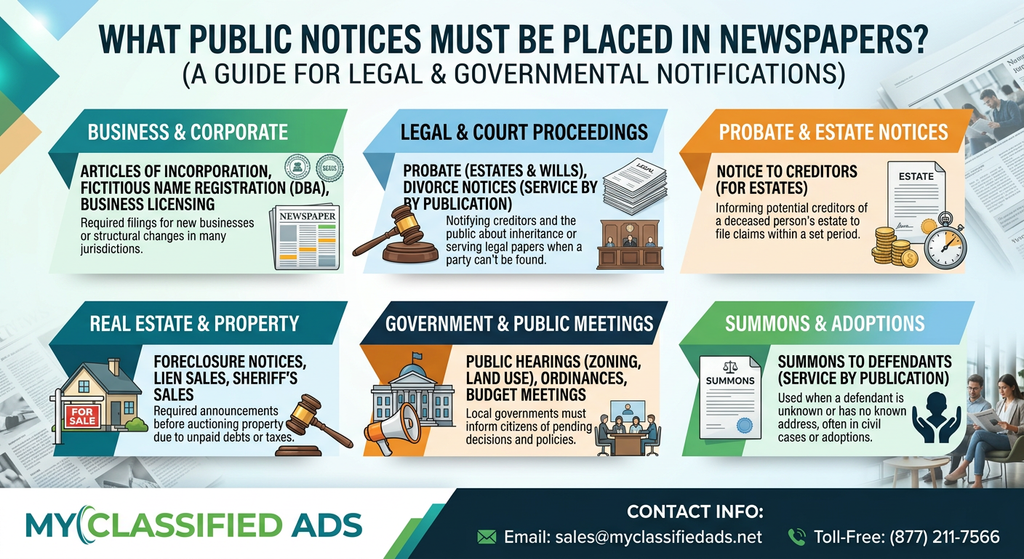
Foreclosures, Probate, and Land Use Notices Foreclosure notices warn the public about pending property sales. States require these announcements to appear in newspapers for a set number of days. Probate notices alert creditors and heirs about estate proceedings. Local rules decide where and how often these must run. Zoning and public hearing notices let citizens know about changes to land use or planning issues. These notices give people a chance to respond.
Business Filings and Government Contracts Many states require newly formed LLCs or fictitious business names to publish a notice. The goal is to prevent fraud and stop duplicate business names. Above all, agencies must publish government contract bids before they can award contracts. As can be seen, these notices ensure fair competition. They also ensure public accountability. Each notice type has its own publication timeline and format.
Only Qualified Newspapers Can Publish Notices Not every newspaper can run legal notices.
States set standards for what counts as a “newspaper of general circulation.” These papers must have paid subscribers, a regular publishing schedule, and keep archives. This system protects public access and legal certainty.
Types of Public Notices that Must Be Placed in Newspapers
States Set Their Own Notice Rules No two states have identical rules. Some require longer publication times for foreclosures; others focus on business filings. AS I have shown, County and city ordinances can add extra steps. It’s important to know the rules for your location.
Digital Publication Is Growing. Most states still demand print publication. However, as a result, digital trends are changing the landscape. Some states now require notices to appear on newspaper websites or in statewide online repositories. A few allow online-only notices for specific agencies. Another key point is that, these new rules influence how people behave.
Check Local Rules Before Publishing
Anyone who needs to place a public notice must check state and local requirements. Law firms, businesses, and individuals need to follow the right process for each notice type. Missing a deadline or using a non-qualified newspaper can delay legal action or cause compliance problems.
What Public Notices Must Be Placed in Newspapers: Why These Notices Matter
Transparency and Public Awareness Public notices play a key role in keeping citizens informed. They alert people about legal changes, property sales, or government decisions. Publishing in newspapers of general circulation makes sure that everyone has a fair chance to respond.
Modernization and Public Access States are updating public notice laws to reflect digital trends. Many now require both print and online publication. This approach increases access and helps more people stay informed. As states test online-first solutions, the laws are likely to keep evolving.
Conclusion: Follow the Law to Stay Compliant Knowing what public notices must be placed in newspapers helps people meet legal requirements. State and local laws control which notices need publication, which newspapers qualify, and how long each notice must run. As digital options expand, always check your local requirements before placing a notice.