
What is a Public Notice?
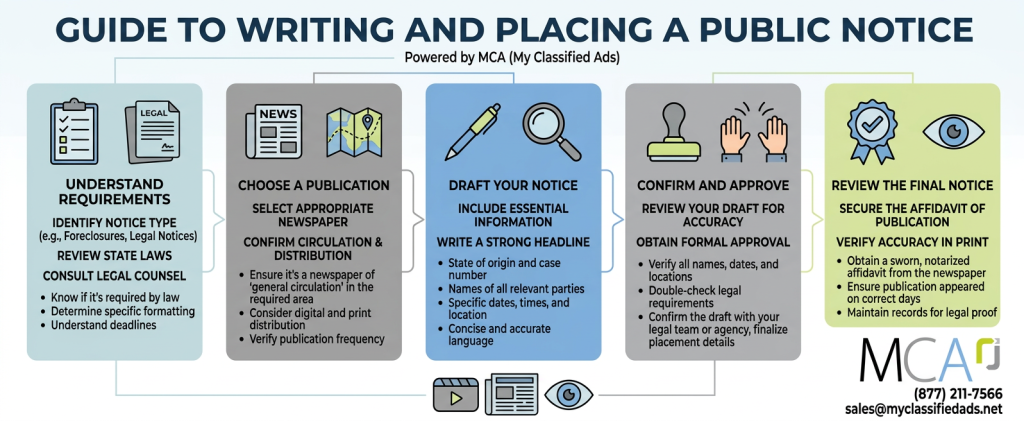
How can I write and place a public notice?

Why Are Public Notices Published in Newspapers?
Public notices have historically appeared in newspapers to guarantee transparency and legal compliance in community affairs. This tradition continues because newspapers ensure broad access—even for those without digital connectivity. Publishing in print also supports local journalism.
- Legal Requirements: Laws frequently require that notices are published in newspapers with significant local circulation, ensuring important information reaches affected residents.
- Community Awareness: Newspapers provide an accessible way to inform the public about changes or events that might impact them, helping ensure no one is left out due to lack of internet access.
- Accountability: Newspaper publication keeps government officials and organizations transparent and answerable to the public.
How to write and place a public notice
- in addition, notices are run in a specific city and state. In some cases, ads will run in nationwide papers. Determining where your notice needs to run is the first step.
- Contact the newspaper agency or agency that specializes in placing legal notices.
- Write your ad (see additional information on what information to include below) or to reduce the length of your ad. You may abbreviate whenever necessary.
- Determine which days you will need your ad to run. This may be a certain number of days or weekends.
- Ask for a quote.
- Approve you ad
- Submit or confirm ad placement to run (ask for proof so that you can see how the ad will appear in the newspaper.)
- Request tear sheet or affidavit after the ad has run.
When writing a legal notice ad you will want to make sure to include more than just the facts. Legal notices explain to the public why their community participation is important. They also give pertinent information about upcoming meetings. And when it is beneficial for them to attend to that particular topic. Letting people know that their involvement makes a difference is a huge part of writing an effective notice. We can help you place your Public and Legal notice in any publication in the United States. Public and Legal Notices are a timeless tradition that act as accessible channels of communication between the general public and the government. For more tips on how to write your notice please see the additional post here. or Place your ad here!